Human in the Loop: When Automation Creates Room for What Matters
How Regiolux automates the production of nearly 800 catalogue pages while deliberately keeping people involved in the process.
Nearly 800 pages and complex product structures: For a catalogue of this size, a high degree of automation is essential. However, Regiolux takes an approach that may seem contradictory at first: automate as much as makes sense while deliberately keeping people involved in the process.
Not every decision can be translated into a rigid template. Where product expertise, editorial decisions or design input are required, the Regiolux team deliberately retains control: Human in the Loop.
From Product Data to an Automated Catalogue
When Regiolux started using xmedia in 2009, the central product database was initially just one part of the challenge. Producing the catalogue required modelling product data, defining attributes, bringing together media assets and structuring the information needed for publication.
The very first catalogue revealed something distinctive: Regiolux did not simply want to adapt to a predefined publishing process. Instead, the system needed to accommodate the requirements of product management, marketing and design. This led to customised solutions at an early stage, including support for multilingual publications.
What began back then has been continuously developed and refined over the years.
Automating Complexity Without Losing Flexibility
As the product portfolio has evolved, the requirements for Regiolux's main catalogue have continued to grow. Different product families, extensive technical information and complex tables need to be structured and presented clearly across nearly 800 pages.
The challenge is not simply the volume of data. Not every product family follows the same logic, and not every piece of information can be published using a standardised structure. Tables need to be organised differently depending on the application, content must be compiled selectively, and images or reference products need to be chosen carefully.
At the same time, the aim is to automate as much of the catalogue production process as possible using existing product data, without forcing product management and design teams into a rigid template.
The central question is therefore: How can a highly complex catalogue be automated efficiently while still allowing sufficient flexibility for technical expertise and creative decisions?
Das Unternehmen:
Technisches Licht mit über 70 Jahren Erfahrung
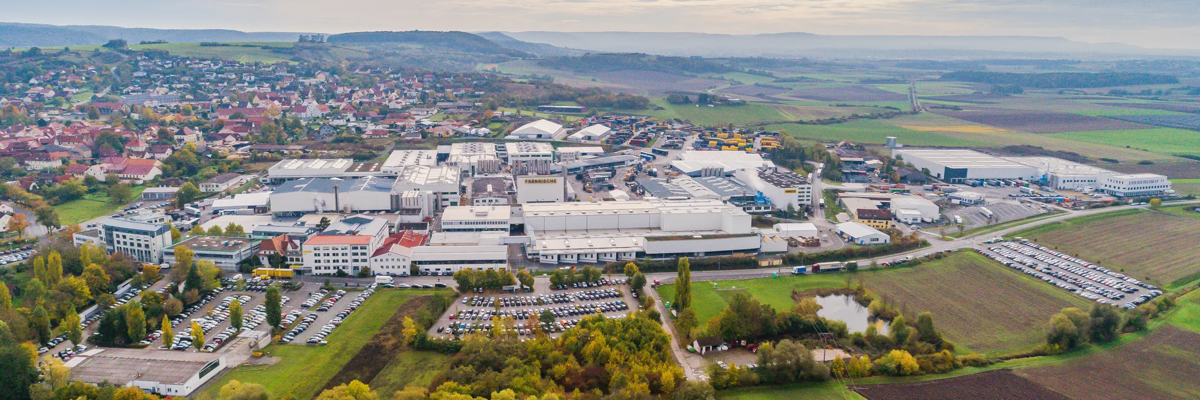
Regiolux ist ein mittelständisches Familienunternehmen mit Sitz in Königsberg in Bayern und seit 1952 in der Welt des technischen Lichts zu Hause. Das Unternehmen entwickelt hochwertige Lichtsysteme für die professionelle Innenbeleuchtung – von Industrie und Gewerbe über Verwaltung und Bildung bis hin zu öffentlichen Bereichen und Handel.
Das breite Produktspektrum und individuelle Projektlösungen bringen eine entsprechend große Vielfalt an Produktinformationen, technischen Merkmalen, Varianten und Medien mit sich. Diese Daten zentral zu strukturieren und für unterschiedliche Anwendungen bereitzustellen, ist deshalb ein wichtiger Bestandteil der Produktkommunikation.
Ein Medium hat dabei bis heute einen besonderen Stellenwert: der Regiolux Hauptkatalog.

xmedia as the Central Platform for Product Data and Publishing
Maintain product data centrally and use it efficiently across different publications: With xmedia, Regiolux lays the foundation for efficient, consistent and largely automated catalogue production.
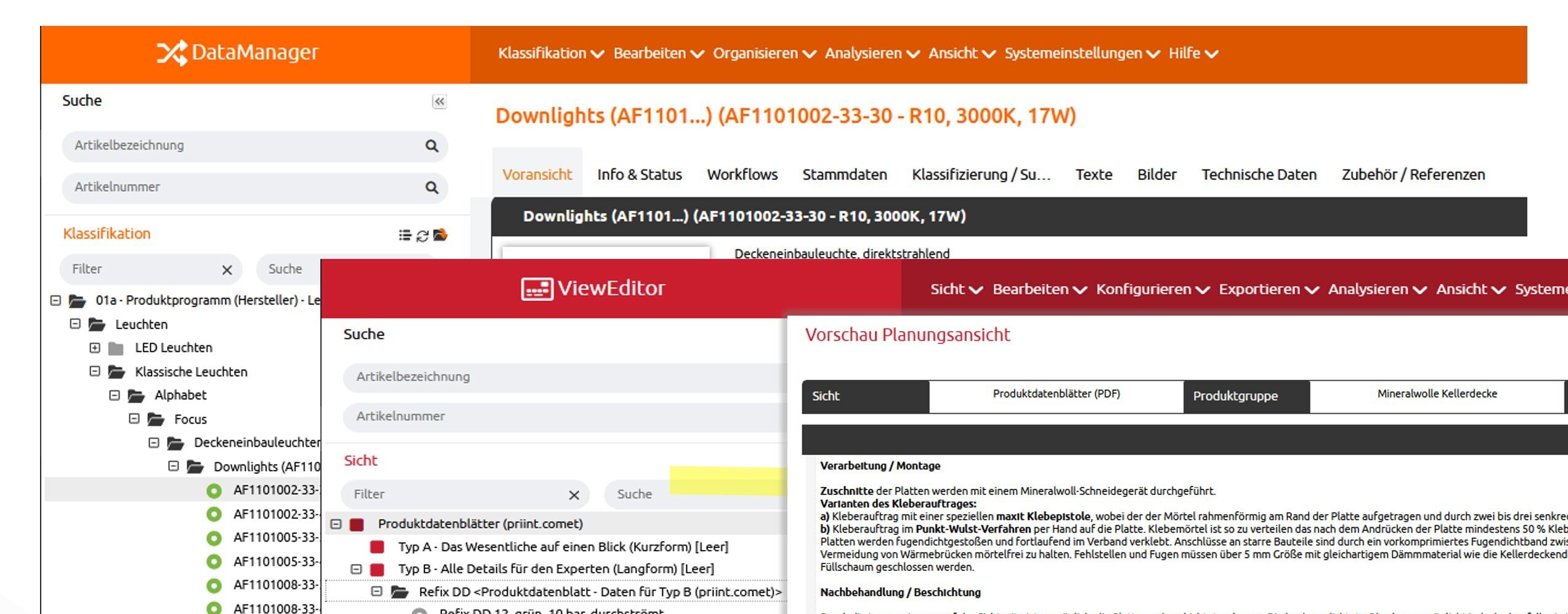
Product information is centrally managed in xmedia PIM and prepared for each publication. The ViewEditor module allows precise control over which products, product groups and information are included in the catalogue.
The so-called Content Definitions play an important role here. They specify directly in xmedia which texts, images, attributes and tables are required, as well as which layout template is used in priint.
The advantage: Content is compiled where the product data and its relationships are best understood. xmedia provides the structured content, while priint handles the automated layout production.
This creates a seamless connection between data management and design- making catalogue production significantly easier.
When Data Automatically Becomes Catalogue Pages.
- Chapter and product family structures
- Product and detailed information
- Product images and other assets
- Extensive technical tables
- Reference products
- Image information and image references
- Type information
- Accessories and product relationships
- QR codes and links
- Image and product type indexes
The numerous technical tables are particularly challenging.
They can span several pages or double-page spreads and contain very different information depending on the product family.
The required content is compiled using the data and logic already available in xmedia. Layout rules in priint then ensure that the corresponding tables and pages are generated automatically.
Even complex matrix layouts featuring multiple product variants can be generated automatically in this way.
Standard, wo Standard funktioniert. Individuelle Logik, wo sie gebraucht wird.
Nicht jede Produktfamilie folgt denselben Regeln. Und nicht jede Anforderung lässt sich mit standardisierten Funktionen abbilden.
Regiolux nutzt deshalb die Möglichkeiten von xmedia, um vorhandene Produktinformationen über sogenannte Proxy-Merkmale gezielt weiterzuverarbeiten.
Dabei bleiben die ursprünglich gepflegten Produktdaten unverändert. Zusätzliche Logiken ermöglichen es, Informationen für bestimmte Anwendungsfälle zu berechnen, zu filtern, zusammenzuführen oder neu zusammenzustellen.
So lassen sich beispielsweise Werte aus unterschiedlichen Datenquellen kombinieren, Minimal- und Maximalwerte ermitteln oder Informationen speziell für komplexe Printdarstellungen aufbereiten.
Das Besondere: Über die Jahre hat das Regiolux-Team umfangreiches Know-how in xmedia aufgebaut. Viele dieser individuellen Logiken kann es heute eigenständig entwickeln, anpassen und weiterführen.
Damit lassen sich auch besondere Anforderungen direkt auf der Produktdatenseite lösen, bevor die Informationen für die automatisierte Publikation bereitgestellt werden.
Weil nicht jede gute Entscheidung automatisiert werden muss.
Der Regiolux-Case zeigt auch eine andere Seite der Automatisierung.
Eine Publikation muss nicht zwangsläufig vollständig automatisch entstehen, um effizient zu sein.
Bei Regiolux werden beispielsweise bestimmte Referenzprodukte bewusst ausgewählt. Bilder können publikationsspezifisch festgelegt werden. Reihenfolgen lassen sich steuern. Einzelne Featureseiten werden nach dem automatisierten Aufbau gestalterisch angepasst.
Das ist kein Bruch im Automatisierungsprozess, sondern eine bewusste Entscheidung.
Denn gerade bei einem hochwertigen Hauptkatalog soll nicht jede Produktfamilie zwangsläufig identisch aussehen.
Automatisierung übernimmt deshalb die Arbeit, die sich sinnvoll standardisieren lässt. Wo redaktionelle Erfahrung, Produktwissen oder Gestaltung gefragt sind, behält der Mensch die Kontrolle.
So entsteht ein hoher Automatisierungsgrad, ohne Individualität und Kreativität aus dem Prozess zu nehmen.
“What began as a catalogue project in 2009 has evolved over the years into a powerful publishing solution. Together with myview, we have continuously implemented new ideas and adapted the solution to our growing requirements. What we particularly value is the flexibility we now have to shape and further develop our processes independently.
Almost 800 Pages with a Very High Degree of Automation
What began as a relatively simple catalogue project in 2009 has evolved over the years into a highly sophisticated publishing solution.
The current Regiolux main catalogue comprises almost 800 pages and includes not only product and product family pages, but also numerous complex tables, overviews, indexes, images, QR codes and product-specific layouts.
A large proportion of this content is generated automatically from the structured product information in xmedia.
At the same time, the publication remains flexible.
Data changes can be incorporated without having to rebuild the entire design process. Standardised workflows and individual requirements work hand in hand.
The result is not rigid, fully automated production, but a publishing process that combines efficiency with creative flexibility.
Conclusion:
Automation Should Serve a Purpose.
The Regiolux case demonstrates that successful catalogue automation does not necessarily mean removing people from the process entirely.
The key is to strike the right balance between data, rules, automation and editorial freedom.
xmedia provides the structured foundation for product data and publishing. priint handles the automated layout process. Custom logic and design rules make it possible to meet even highly complex requirements.
And wherever product expertise or design decisions make a difference, the Regiolux team can still intervene deliberately.
The result is a main catalogue of nearly 800 pages, created from centrally maintained product information: highly automated, easy to update and yet individually tailored.
Automation Where It Makes Work Easier.
Flexibility Where It Adds Value.
Regiolux im Detail: So entsteht ein Produktkatalog mit rund 800 Seiten
Aufgezeichnet auf den priint:day am 23. April 2026, geben Markus Dolch und Thomas Kübler von myview systems Einblicke in das gemeinsame Publishing-Projekt mit Regiolux.
Das Besondere: Sie zeigen live, wie der Katalog entsteht. Anhand konkreter Praxisbeispiele demonstrieren sie das Zusammenspiel von xmedia und priint und zeigen, wie sich komplexe Produktdaten weitgehend automatisiert in einen hochwertigen Produktkatalog verwandeln lassen – mit genügend Freiraum für individuelle Anforderungen und manuelle Anpassungen.
zum Youtube VideoIhr Weg zur Product Experience
Wir analysieren Ihre Anforderungen und beraten Sie in einem unverbindlichen Erstgespräch zur möglichen Lösung.
